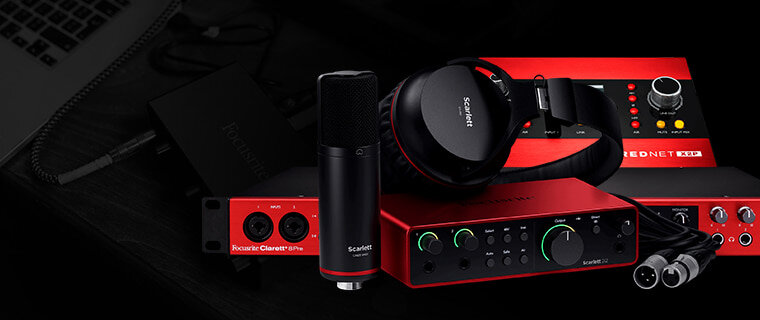
The unit seems solidly and compactly built. The 8 preamps all have independent phantom power and pad (cuts 20 dB) switches, and can all be used for either low impedance microphones (XLR input), high-impedance instrument (10K ohm) or line-level input. In addition to ADAT and MIDI inputs and outputs (I haven’t used those), and of course firewire, the analog ouputs on the 8pre are Main Outs (2 balanced TRS jacks, left and right or 1 and 2) and Phones (stereo ¼” headphone jack with left and right or 1 and 2). Use of the outputs is extremely flexible through software. You can make two stereo output mixes and direct to Mains and Phones, or 4 mono mixes directed to Main1, Main2, Phones1, Phones2, or any combination. I don’t have enough experience to evaluate the quality of the preamps for others, but they seem fine to me.
There are three main programs that come with the 8pre.
1) MOTU Audio Setup. It is used to control driver settings (sample rate, buffer size, channel names, etc.). You probably won’t need this much once you have it set the way you want it.
2) MOTU CueMix Console is used to control the CueMix DSP hardware on the 8pre. This allows you to have direct hardware playthrough so it works like a hardware mixer (but done through software). It has a software mixing board with multiple mixes that can go to different 8pre outputs. But you cannot apply any effects (such as tone control/EQ) in this mode.
3) The biggest program is AudioDesk. It is used for recording, playback, editing, playing live through the computer and applying software effects. It is intricate and flexible. One problem I ran into in using AudioDesk is that the CueMix DSP settings were still in effect while using AudioDesk even though CueMix Console was not running, so I was getting unexpected signal paths. The solution was simply to set all faders to minimum or mute or disable outputs in CueMix Console, then all signal paths go through AudioDesk alone. AudioDesk runs only on a Mac. It is not yet Universal (i.e., for Intel macs), and it did not work (crashed when using effects) on my new MacBook, so I have to run it on my old iBook until they finish the Universal update.
Even on the old iBook (500 MHz, 640 MB ram), sending 7 input channels through AudioDesk with multiple effects on most of them, I found that I could set the buffer at 128 and have no noticeable latency and still be within the capability of the computer. The interface response was slow though.
The unit must be connected and on to run any of the software, and the unit must be connected to a computer to use it (unless you are using it only in Converter mode, to take analog signals from the preamp inputs to digital ADAT output).
Two good manuals are included, one for the 8pre and one for AudioDesk. Because AudioDesk is so complex, and some knowledge is assumed, I had trouble with setting it up to do what I wanted – use it as a live mixer for a gig. The unit is capable of this but it is not primarily designed for it so the manual does not address thoroughly how to do it. After extensive support from MOTU, here are the options that worked. These setups are for two mono outputs, one for main output and one for monitor output. We used the 8 pre successfully as a mixer for a live gig. The outputs are sent to amplifiers/PA system.
How to setup for live mixing without recording
CueMix Console software
Overview – Signals go only through hardware on the 8pre using the onboard CueMix DSP chip.
Pros – Relatively simple and intuitive to set up and control. No latency (delay of output).
Cons – Can’t add effects. Most importantly you have no tone (EQ) control.
How – Set up two mixes in CueMix Console using the mix tabs at the bottom. Route each to the desired output on the 8pre. You can set one up for main ouput and one for monitors or phones. Output is quite flexible.
AudioDesk software – Sends option
Overview – Each track has an output to the main output and a “send” to the output that goes to monitors. The volumes can be controlled independently, and there is a master fader for each output.
Pros – Fairly easy to operate. Only need to control one effect for each input.
Cons – Can’t control effects independently for each output. Setup is a little non-intuitive.
How – Make an auxiliary track for each input channel. Set output to the main output, e.g., Main Out 1. Set a send menu in each track to Bus 1. Make a Master Fader track set to Main Out 1; it is the master for the main output. Make an Auxiliary Track set with input Bus 1, output to the output for monitors, e.g. Main Out 2. That auxiliary track is the master fader for the monitor output. Control the level of individual tracks to monitors with the 1st send knob.
AudioDesk – Dual track option
Overview – Each input channel gets two tracks, one going to main output and one to monitors.
Pros – Effects can be controlled independently for main and monitor output. Easier than previous method to control each channel’s monitor levels (slider instead of knob) and you get a level meter for each channel’s monitor track. More intuitive setup than previous method.
Cons – More tracks to keep track of. Have to maintain twice as many effects. Uses more processor power because effects are doubled.
How – Make two auxiliary tracks for each input channel. First set goes to main output and second set goes to monitor output. Make a master fader track for each set, with corresponding output.
Setting up the mixing board in AudioDesk is partly nonintuitive to me, but once set up it works. Surprisingly, for just live monitoring you don’t use regular Audio Tracks at all, you use Auxiliary Tracks. It has a “Mix Mode” that allows you to set up separate mixes, but surprisingly that is not how you actually set up separate mixes for live output. You do that through the two methods above. Also, I still don’t understand why you can set up a Master Fader track for the output that the Aux. Tracks are set for (e.g., for a main output), but you have to use another Auxiliary Track AS a master fader, going through a bus, to have a master fader for the sends output (e.g., for a monitor output).
The effects included with AudioDesk are very powerful and complex. I wish there was a bonehead EQ that just had simple sliders for several frequency bands, but the EQs it has are much more refined (and more time-consuming to set up and control). But the presets in the effects are very handy to give you an idea of the possibilities of each effect.
MOTU’s support is awesome! Both before I bought it and after, I had lots of questions. They were always answered promptly and well. The same person worked with me throughout, and remembered our previous interaction. I called him on the phone and he walked me through the setup efficiently. I was really impressed with his ability and helpfulness.
Overall I’m very happy with the 8pre and included software. It does everything advertised and more, it is a quality unit, and you can’t beat the price (I paid $550) for the features.